
KENYAN GROWERS · CULTIO NURSERIES
Coffee growing guide in Kenya
A practical coffee growing guide for Kenyan farmers: choose planting material, plan your site, establish the crop and prepare for market.
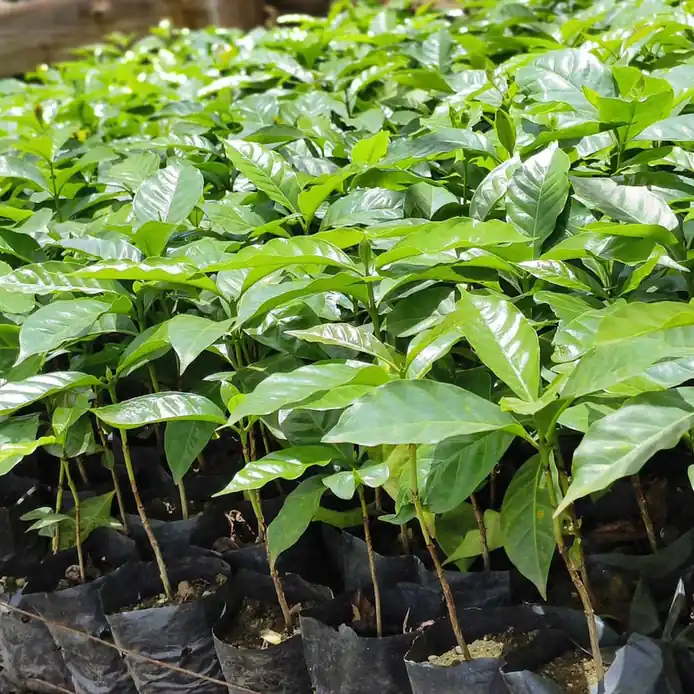
Source-based growing information. Confirm variety, rootstock and a site-specific plan with your county extension officer before planting.
On this page
Overview
A coffee project starts before the first seedling is planted. Growers around Eldoret, Nandi and Trans Nzoia should assess site conditions, water, labour and access to a cooperative or processor together. Plan how ripe cherry will reach the buying point during peak picking. A seedling budget without establishment care and harvest labour gives only part of the investment picture.
Choose a variety
Batian and Ruiru 11 are Kenyan improved Arabica varieties. Their growth habits and management differ, so choose identified planting material and keep varieties mapped in separate blocks where practical. Ask the nursery about seedling origin, age and hardening. Disease resistance does not remove the need for scouting, pruning, balanced nutrition or correct handling of harvested cherry.
Site selection
Inspect drainage, exposure and soil depth before committing land. Arrange a soil test and discuss acidity management with your extension adviser. On slopes, plan rows and conservation measures along the contour. Protect watercourses and leave access for harvesting. Work out how seedlings will be watered through an unexpected dry spell, including the cost of pumping and storage.
Planting
The Kenya Coffee Sustainability Manual’s field-layout section gives Batian at 2.5 m between rows × 2.1 m between plants, and Ruiru 11 at 2 × 2 m. The manual has an inconsistent Batian table entry; the planner follows its field-layout dimensions. Wider or closer systems need an adviser’s assessment of canopy and training. Peg the chosen layout, prepare holes and transplant without breaking the root ball.
Ongoing care
Keep young plants free of severe weed competition and protect the root zone with suitable mulch while leaving the stem clear. Inspect for dry-season stress, missing plants and waterlogging. Follow a nutrition plan based on analysis and crop stage. Train and prune for the chosen system; extra stems and crowded branches change light, access and the work needed at harvest.
Pests and diseases
Scout for coffee berry disease, leaf rust, berry damage and insect pests even where improved varieties are planted. Record symptoms and the affected area, and obtain advice before spraying. Use registered products only as labelled, with protective equipment and the required harvest interval. Clean equipment and maintain a simple record of each treatment, date and block.
Harvest
Pick ripe cherry selectively and keep unripe, dry and damaged berries separate. Arrange prompt delivery and processing with your cooperative or buyer. Record cherry weight, labour, deductions and eventual payments so you can compare returns between seasons. Seedlings establish the crop; quality picking, processing and marketing determine much of the value that reaches the grower.
Sources and further reading
International references inform planning; they do not establish suitability for a particular Kenyan farm.
Plan your next planting
Discuss your crop, farm conditions and quantity with Cultio in Eldoret. Seedlings are collected from the nursery.
Shop coffee seedlingsCalculate seedling quantities